
[Podcast Episode #30] Protect What Is Most Important to You: The Art of Not Messing up Your Life
Episode #30
The wins you’re most proud of can vanish faster than you think—not from one colossal blunder, but from small, compounding mistakes. In this episode we dig into a simple yet powerful lens: some parts of life are rubber balls that bounce back, while others are fragile ornaments that shatter once and never look the same. That clarity reshapes how we treat money, marriage, leadership, and reputation, and it guides the guardrails we build before stress tests our character.
Some topics covered are:
- Rubber balls vs ornaments framework
- Shifting from entrepreneur to investor without a plan
- Taming drive to avoid overreach
- Park walks as boundary strategy
- Stopping the second mistake
- Reflection as a control system
- Relationship bank accounts and trust deposits
- Choosing winnable battles
- And more…
Episode Summary
There comes a point in life when building is no longer the hardest part. In the early years, everything is about growth. You are launching the company, pursuing the marriage, expanding the vision. Energy is high and risk feels heroic.
But once you have built something meaningful, the question changes. It is no longer How do I grow this? It becomes How do I not destroy it?
Don’t Drop the Ornaments
Philip used a simple picture. Life is like juggling. Some balls are rubber. When you drop them, they bounce. A failed project. A bad quarter. A wrong hire. Painful, yes, but recoverable.
Other balls are Christmas ornaments. When they fall, they shatter.
Your integrity is an ornament.
Your marriage is an ornament.
Your relationship with your children is an ornament.
The tragedy is not that people fail. The tragedy is that successful people often shatter what matters most through small, careless decisions that felt harmless in the moment.
Walk Around the Park
Philip once walked with a former heroin addict who had been sober for years. To reach their destination faster, they could have cut through a park. The man stopped and asked to walk around it. That park was where he used to buy drugs.
He did not test his strength. He respected his weakness.
We all have a park. It may not be drugs. It may be power, money, gambling, alcohol, or emotional affairs that begin as “just a friendship.”
Most people do not wake up intending to destroy their lives. They simply walk through places they should have avoided. They assume discipline will save them. They overestimate themselves.
Wisdom is not proving you can handle temptation. Wisdom is designing your life so you do not have to.
The Second Mistake
There is another image that explains how lives unravel. A young woman stepped into the street while distracted. A bike brushed her shoulder. That was the warning. Instead of stepping back, she turned to shout. In that moment, a taxi hit her.
The first mistake was small.
The second mistake was catastrophic.
In chess, masters know that when you make a mistake, you pause. You reassess. You do not let emotion push you into a worse move.
In life, we often do the opposite. A small tension in a business partnership is ignored. A risky investment is justified. A pattern of teasing with a child slowly becomes something harsher than intended.
Rarely does everything collapse at once. It erodes through unreflected steps.
The Relationship Account
Philip described relationships as bank accounts. Every interaction is either a deposit or a withdrawal.
When a marriage falls apart, it is usually not because of one final argument. It is because withdrawals have been made for years without deposits.
The same is true in business. A key employee leaving is rarely about one conversation. It is the accumulation of neglect.
If you keep withdrawing from an ornament, eventually it falls.
Fight the Right Battles
Cris reflected on a lesson from history. Fight wars you can win.
Not every opportunity is worth chasing. Not every argument is worth escalating. Some people are fighting bravely in the wrong arena, in a business model that does not fit them, in battles that drain more than they build.
Part of not messing up your life is choosing wisely what you fight for and what you walk away from.
Conclusion
If you want to protect what is most important to you, reflection must become a habit. You must know which balls in your life are rubber and which are ornaments. You must know where your park is. You must recognize the first mistake before it becomes the second.
Building something meaningful takes years.
Shattering it can take a moment.
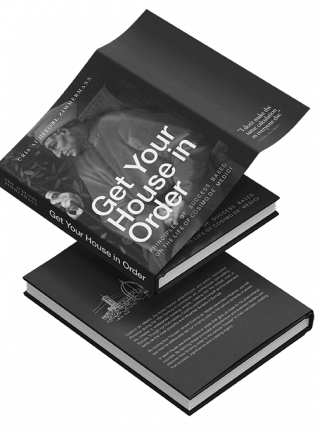
Get a free copy of "Get Your House in Order"
Principles of success based on the life of Cosimo de’ Medici by Cris Auditore Zimmermann